Harper Washington · 14 September 2026
Exploring Scalable Features in Team-Based Visual Planning Systems
Team-based visual planning systems have grown into essential platforms that let groups map out projects through shared diagrams, timelines, and interactive boards, and data from industry reports shows adoption rates climbing steadily across sectors since 2023. These tools combine drag-and-drop interfaces with backend architectures that support simultaneous edits from dozens or even hundreds of users without performance drops, while researchers at various institutions track how such systems handle increasing data loads and user counts. Scalability here refers to the ability to maintain responsiveness as team size expands, project complexity rises, and integration demands multiply, and studies indicate that platforms failing to address these elements often see user drop-off within the first six months of deployment.
Core Architectural Elements Supporting Growth
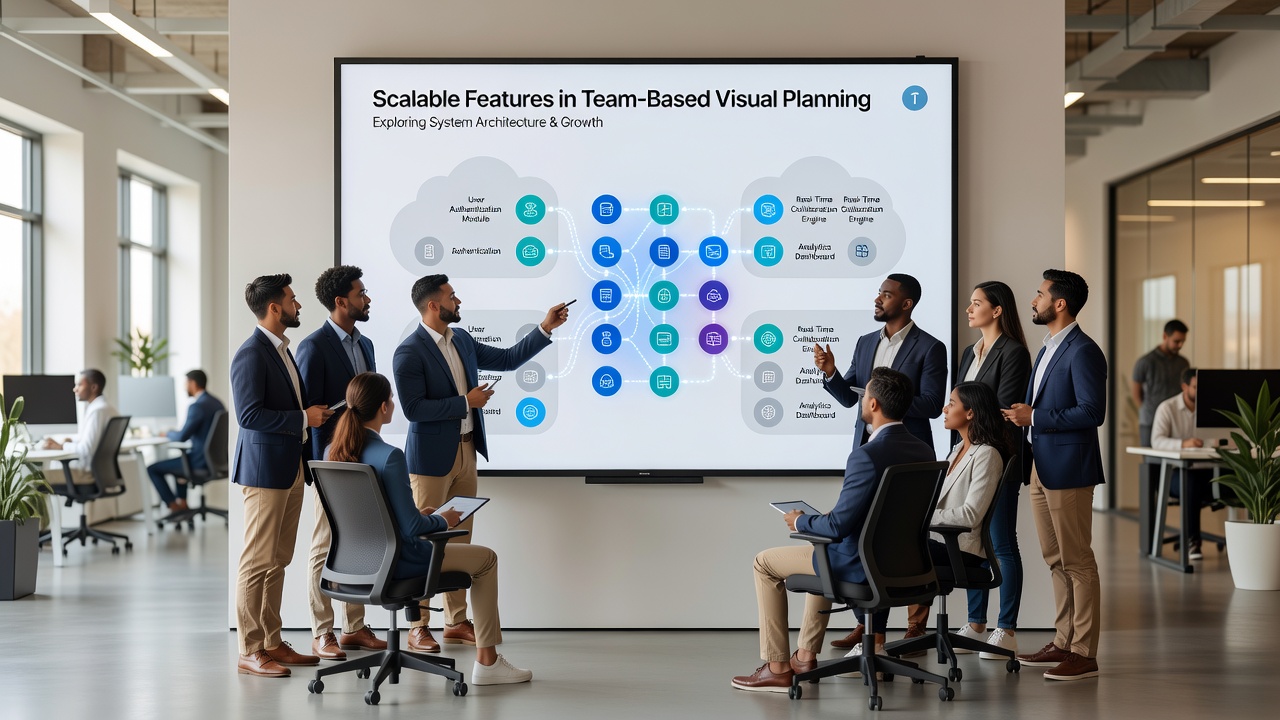
Engineers design these systems around distributed databases and event-driven synchronization protocols that push changes across nodes in milliseconds, and this setup allows one user to add a new workflow branch while another refines metrics in a separate section. Cloud providers supply the underlying compute resources that scale automatically during peak planning sessions, such as end-of-quarter reviews when entire departments log in together, and figures from technology analyses reveal that elastic resource allocation cuts latency by up to 40 percent compared with static server setups. Security layers built on role-based access controls and end-to-end encryption protect sensitive visual data, with updates rolling out regularly to meet compliance standards set by bodies like the National Institute of Standards and Technology in the United States.
Real-Time Collaboration Mechanisms
Participants in these environments benefit from cursor tracking, version history sliders, and comment threads anchored directly to specific elements on the canvas, and observers note that these features reduce miscommunication during joint sessions. Conflict resolution algorithms merge simultaneous edits by prioritizing timestamps and user permissions, preventing overwritten work while preserving individual contributions for later review. Data from collaborative software evaluations shows teams using these mechanisms complete planning cycles 25 percent faster than those relying on static documents shared via email, although integration with existing enterprise calendars and task trackers remains a key variable that determines overall efficiency.
Handling Large-Scale Data and User Loads
As projects expand, visual planning systems incorporate layered canvases and modular components that load only visible sections, and this approach keeps browser performance stable even when boards contain thousands of interconnected nodes. Analytics dashboards within the platforms track usage patterns and surface bottlenecks, such as slow-rendering image uploads or crowded connection points, and administrators can then adjust permissions or archive completed phases. In September 2026, several platforms plan to roll out enhanced AI-assisted summarization tools that condense sprawling diagrams into concise reports, and early tests reported by academic research groups suggest these additions will further support teams managing global operations across multiple time zones.

Performance benchmarks published by organizations such as the OECD highlight that systems capable of supporting 500 concurrent users maintain sub-second response times when built on microservices architectures, whereas monolithic designs often degrade after 150 simultaneous connections. Teams in manufacturing and software development have documented cases where visual planning boards replaced traditional Gantt charts, resulting in clearer dependency mapping and fewer overlooked tasks during scaling phases.
Integration and Extensibility Options
Application programming interfaces connect visual planning tools to customer relationship management platforms, code repositories, and financial tracking software, and this connectivity lets updates in one system reflect instantly across linked boards. Plugin marketplaces allow organizations to add custom shapes, automated reporting scripts, or industry-specific templates without rebuilding core functionality, and evidence from enterprise adoption surveys indicates higher retention rates among users who customize their environments early. Observers note that open standards for data export prevent lock-in, enabling seamless migration when teams evaluate new platforms or consolidate tools after mergers.
Security and Compliance Considerations
Encryption protocols and audit logs form the backbone of trust in shared visual environments, and regulatory frameworks in regions such as the European Union require documented access trails for any planning data tied to personal information. Regular penetration testing and third-party certifications help identify vulnerabilities before they affect collaborative sessions, while granular sharing settings let project leads restrict views to specific diagram sections. Research from Canadian academic institutions on digital workspace security underscores that scalable systems with built-in compliance modules experience fewer incidents than those retrofitted with security features after initial launch.
Conclusion
Scalable features in team-based visual planning systems continue to evolve through advances in cloud infrastructure, synchronization technology, and user interface design, and organizations that evaluate these capabilities against their growth projections position themselves for smoother project execution. Continued monitoring of adoption metrics and technical benchmarks will guide future refinements, while integration with emerging standards ensures compatibility across diverse workflows and regulatory landscapes.