Carlo Brooks · 26 October 2026
How Interactive Digital Boards Facilitate Multi-Generational Knowledge Transfer in Family-Owned Businesses
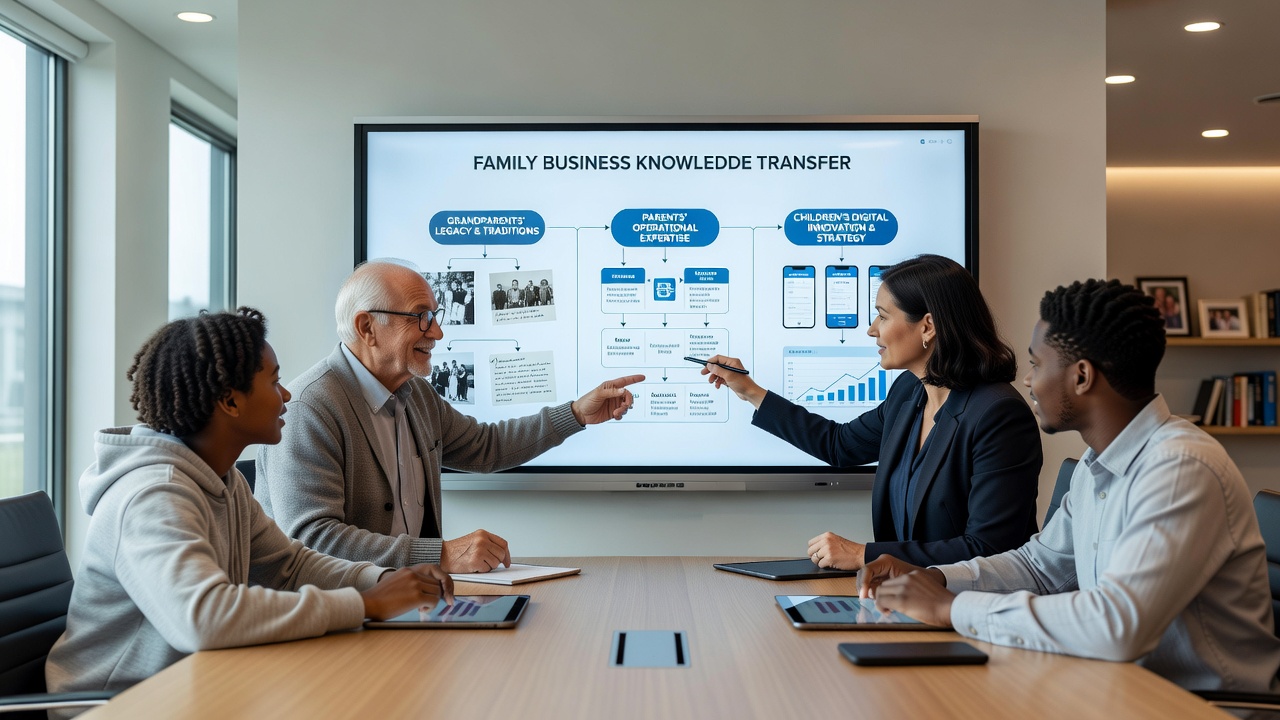
Family-owned businesses often face the task of passing operational knowledge, strategic insights, and institutional memory from one generation to the next, and interactive digital boards provide structured platforms that support this process through visual mapping, real-time annotations, and shared digital workspaces. These tools combine touchscreen interfaces with collaborative software that allows users to create diagrams, timelines, and process flows while preserving every edit in searchable archives.
Researchers at several institutions have documented how such boards reduce information loss during leadership transitions, particularly when older operators work alongside younger family members who bring different technical expectations. Data from industry surveys indicates that family enterprises adopting these systems report higher retention rates of procedural details compared with those relying solely on verbal briefings or paper records.
Core Challenges in Multi-Generational Knowledge Transfer
Succession events in family businesses frequently encounter gaps where tacit expertise held by senior members fails to reach incoming leaders, and studies from the OECD highlight that only a fraction of such firms survive beyond the second generation when documentation remains informal. Interactive digital boards address this by converting conversations into persistent visual records that multiple users can access simultaneously, whether they sit in the same room or connect remotely across time zones.
Observers note that older generations often prefer narrative explanations drawn from decades of experience, whereas newer participants expect searchable databases and data visualizations. Boards equipped with layering functions let teams overlay historical context onto current metrics, creating a single workspace that satisfies both preferences without forcing either group to abandon their natural style.
Features That Support Knowledge Capture and Sharing
Modern interactive boards integrate cloud synchronization, version control, and export options that turn live sessions into reusable templates. When a founder sketches a supply-chain decision tree, the system timestamps each node and allows later users to add comments or attach supporting documents directly to specific branches. This creates an evolving knowledge graph rather than a static document that quickly becomes outdated.

Integration with existing enterprise software further extends utility, as boards can pull live inventory figures or financial dashboards into the same canvas used for strategic discussions. In October 2026, a joint report issued by Statistics Canada and the European Commission on family enterprise digital adoption showed measurable increases in documented processes among firms that deployed these boards for at least twelve months.
Practical Applications Across Business Functions
Training sessions benefit when senior staff demonstrate equipment maintenance routines on the board while apprentices record questions in real time, building a searchable FAQ that grows with each cohort. Financial planning meetings gain clarity when cash-flow projections appear alongside historical performance charts, enabling younger members to trace how past decisions shaped current outcomes.
One family manufacturing firm in regional Australia implemented boards during quarterly reviews, resulting in archived decision logs that new managers consult when evaluating equipment upgrades. Similar patterns appear in Canadian agricultural cooperatives where boards display seasonal yield data layered over multi-year weather records, giving incoming operators immediate access to patterns that previously existed only in senior farmers' recollections.
Evidence from Recent Studies and Implementations
Academic analyses conducted at the University of Melbourne's Centre for Family Business have tracked how visual collaboration tools correlate with smoother handovers, noting that boards reduce reliance on single-point knowledge holders. Government statistics from the Australian Bureau of Statistics further indicate rising adoption rates among small and medium family enterprises seeking to formalize succession protocols.
These systems also accommodate hybrid work scenarios common after 2020, allowing dispersed family members to contribute annotations during live sessions and review recordings afterward. The combination of synchronous and asynchronous access supports knowledge transfer across geographic and generational divides without requiring constant physical presence.
Conclusion
Interactive digital boards function as living repositories that capture, organize, and transmit the accumulated expertise essential to family business continuity. By converting discussions into structured, revisable records, they bridge differences in communication styles between generations while preserving context that traditional methods often lose. As adoption data from multiple regions continues to accumulate, these tools demonstrate measurable support for the structured transfer of operational wisdom across successive leadership cohorts.